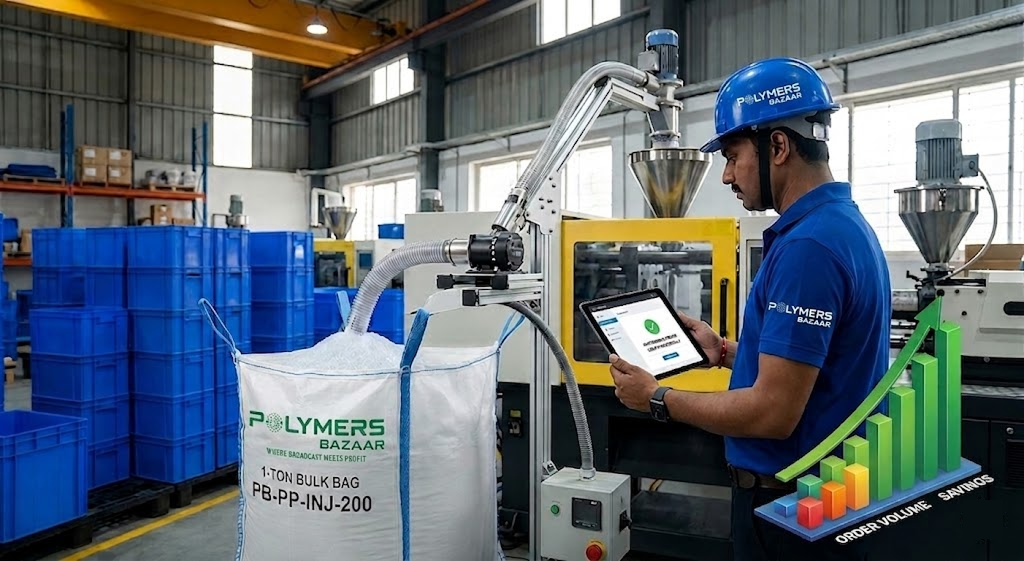
Successfully closing an initial transaction on a digital supply chain platform proves that moving away from unverified brokers works. However, many processors slip back into the habit of ad-hoc spot buying. While this satisfies immediate factory floor needs, it exposes your facility to extreme market volatility.
To
permanently stabilize your operational margins, you must transition from single
spot-trades to programmatic, automated repeat purchasing loops.
The Hidden Financial Losses of Ad-Hoc Spot Buying
Procurement
in the plastic processing industry is heavily impacted by external macro
forces. When purchasing on an isolated, one-off basis, hidden inefficiencies
quickly drain capital:
- The Volatility Trap: Fragmented ordering
forces you to absorb sudden market spikes driven by global crude oil
fluctuations. This unpredictable pricing directly undercuts your quarterly
profit goals.
- The Logistics
Surcharge: Disorganized, irregular orders create fragmented shipping
schedules. This drastically increases your real freight cost per metric
ton of resin.
- Machine Downtime: Waiting for a spot
negotiation to clear creates logistics bottlenecks, leaving expensive
machinery completely idle.
Driving Profitability via Procurement Automation
Transitioning
to automated repeat ordering takes the guesswork out of your raw material
supply chain:
1. Tracking the Polypropylene Injection Molding Price India
Instead
of constantly chasing manual price sheets, processors can utilize real-time
price trend alerts. For instance, monitoring the exact movements of the polypropylene
injection molding price India market allows you to set automated purchase
parameters. The platform triggers your contract the moment market fundamentals
turn favorable, locking in lower pricing tiers before a seasonal surge.
2. Consolidating Bulk Orders via a B2B Polymer Marketplace India
Suppliers
favor predictable demand. By leveraging an advanced B2B polymer marketplace
India, you can group a quarterly material requirement into a single,
structured contract. Suppliers can then schedule automated monthly drop
shipments directly to your facility, optimizing logistics routes and lowering
freight costs.
3. Resolving Capital Friction: Buy Polymers on Credit India
Maintaining
a steady flow of inventory requires fluid financing. Modern digital platforms
allow qualified MSMEs to seamlessly buy polymers on credit, unlocking
structured trade finance options right at the point of purchase.
Your 4-Step Guide to Automating Procurement
Ready
to transition away from volatile spot markets? Follow this simple
implementation path:
- Audit Consumption: Evaluate your
factory's historical raw material usage over the last two quarters to establish
your exact baseline monthly tonnage.
- Configure App
Parameters: Define your target pricing thresholds for specific resin grades
(like PP Injection, PVC, or HDPE) within the digital platform's dashboard.
- Link Financing: Connect your active
trade credit line to ensure seamless, automated transactional clearance
for recurring batches.
- Deploy Logistics
Schedules: Coordinate with the integrated shipping desk to lock in a
recurring, multi-batch delivery route tailored to your warehouse storage
capacity.
Future-Proofing Your Plant
In
a market defined by rapid supply chain shifts, waiting until your warehouse is
completely empty is a major financial risk. Sourcing automation acts as a
reliable shield for your business. By transitioning to recurring, automated
procurement loops, you secure stable material costs, maximize volume discounts,
and keep your production lines running smoothly year-round.