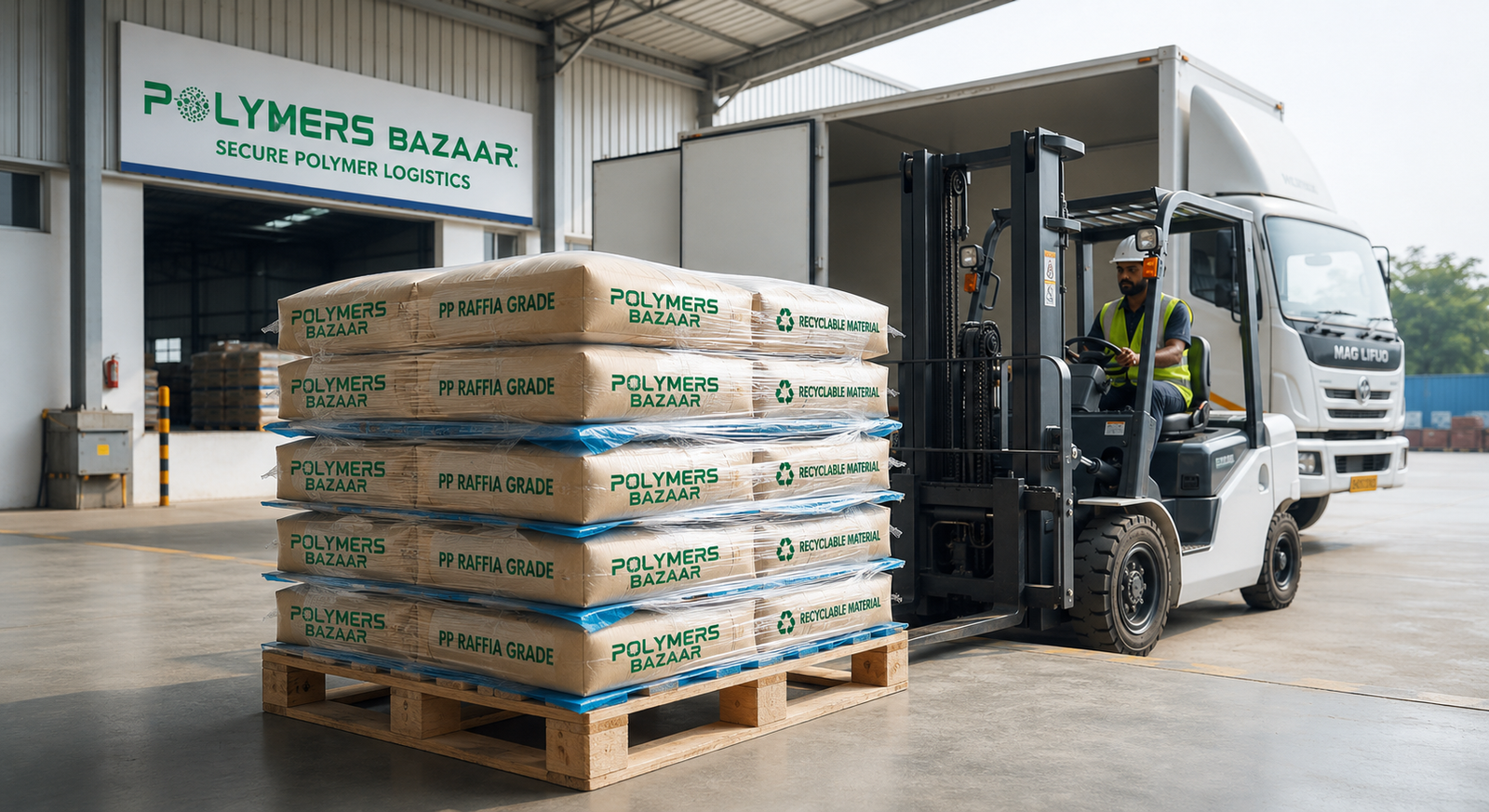
The last mile is the shortest leg of the polymer supply chain, but it is often the most operationally challenging and expensive. While bulk shipping handles the heavy lifting across states, the final journey to a plastic manufacturing plant introduces manual handling, shifting road conditions, and environmental exposure. For plastic processors in India, last-mile transit damage results in contaminated raw materials, rejected shipments, and costly production downtime.
At
Polymers Bazaar, we understand that
securing the right price and credit terms for your PP, HDPE, LDPE, or PVC
granules is only half the battle. The material must also arrive at your factory
floor intact. Mitigating last-mile logistics risks requires a strategic focus
on packaging integrity, strict handling protocols, and reliable transport
partners.
Critical Vulnerabilities in Last-Mile Polymer Shipping
Polymer
resins, pellets, and reprocessed flakes face unique structural and
environmental threats during final delivery. Identifying where the breakdown
occurs helps manufacturers prevent material waste.
· Packaging Punctures: Forklift tines frequently pierce woven sacks or corrugated gaylord boxes during rapid local unloading. Moisture Contamination: Compromised stretch wrapping allows rain or high humidity to penetrate the packaging. This ruins hygroscopic polymers like PET or Nylon, leading to processing defects.
· Pallet Shifting: Inadequate blocking and bracing inside local delivery trucks causes heavy loads to slide. This can tip over stacks and spill valuable materials.
· Contamination from Debris: Fractured wooden pallets can introduce splinters or nails that rip open bags and allow dirt to mix with virgin polymer granules
Strategic Solutions to Minimize Last-Mile Transit Damage
Protecting
your polymer cargo during the final leg requires a multi-layered approach that
combines heavy-duty packaging with strict quality control protocols
1. Standardize Palletization and Stacking Rules
Improperly
secured loads are highly susceptible to the vibrations and sudden stops typical
of local Indian road routes.
·
No Overhang: Center all bags precisely on the pallet. Overhanging
edges invite impact damage from truck walls and adjacent freight.
·
Overlapping Patterns: Stack polymer bags in an overlapping
brick pattern to distribute weight evenly and prevent toppling.
·
Secure Bracing: Use dunnage bags and heavy-duty logistic straps
inside delivery vehicles to eliminate lateral movement during sharp turns or
sudden braking
2. Upgrade Internal and External Packaging
Enhancing the physical barrier of your cargo
provides the strongest defense against punctures and humidity.
Advanced Liners: Deploy thick, moisture-barrier poly liners inside woven bags or boxes
to seal out environmental moisture and dust.
High-Performance Stretch Wrap: Apply heavy-gauge stretch film with high retention force, ensuring the
wrap explicitly secures the bottom layer of the container to the pallet itself.
Anti-Slip Sheets: Place tier sheets between stacked layers of polymer sacks to increase
friction and stop individual units from sliding off.
3. Implement Strict Pre-Loading Facility
Audits
Technology and premium packaging matter little
if the physical handlers do not respect the product.
·
Trailer
Inspections: Require transport teams to
check truck floors for protruding nails, water leaks, or oil residues before
loading any polymer sacks.
·
Forklift
Discipline: Audit cross-dock facilities
to ensure operators keep forklift tines smooth and never drag polymer bags
across warehouse surfaces.
·
Clear
Labeling: Use highly visible, weather-resistant signage
indicating "Do Not Double Stack" or "Keep Dry" on all sides
of the shipment