When a granule batch goes bad on the
machine, the place where it was stored is the last thing people think about. It
was packed, dry, and put on shelves and it stayed there for months. Once it
starts splintering or underperforming, no one remembers that the culprit might
be that corner of the warehouse.
If you are looking for advice on storing
polymer granules, you are probably a buyer or a manufacturer that wants to
prevent financial loss from defective material, supplier disputes, or both or
just a curious person. This guide will tell you what proper storage conditions
are, what factors are critical, and how to organize storage for bulk buyers.
What Is Proper Polymer Granule Storage?
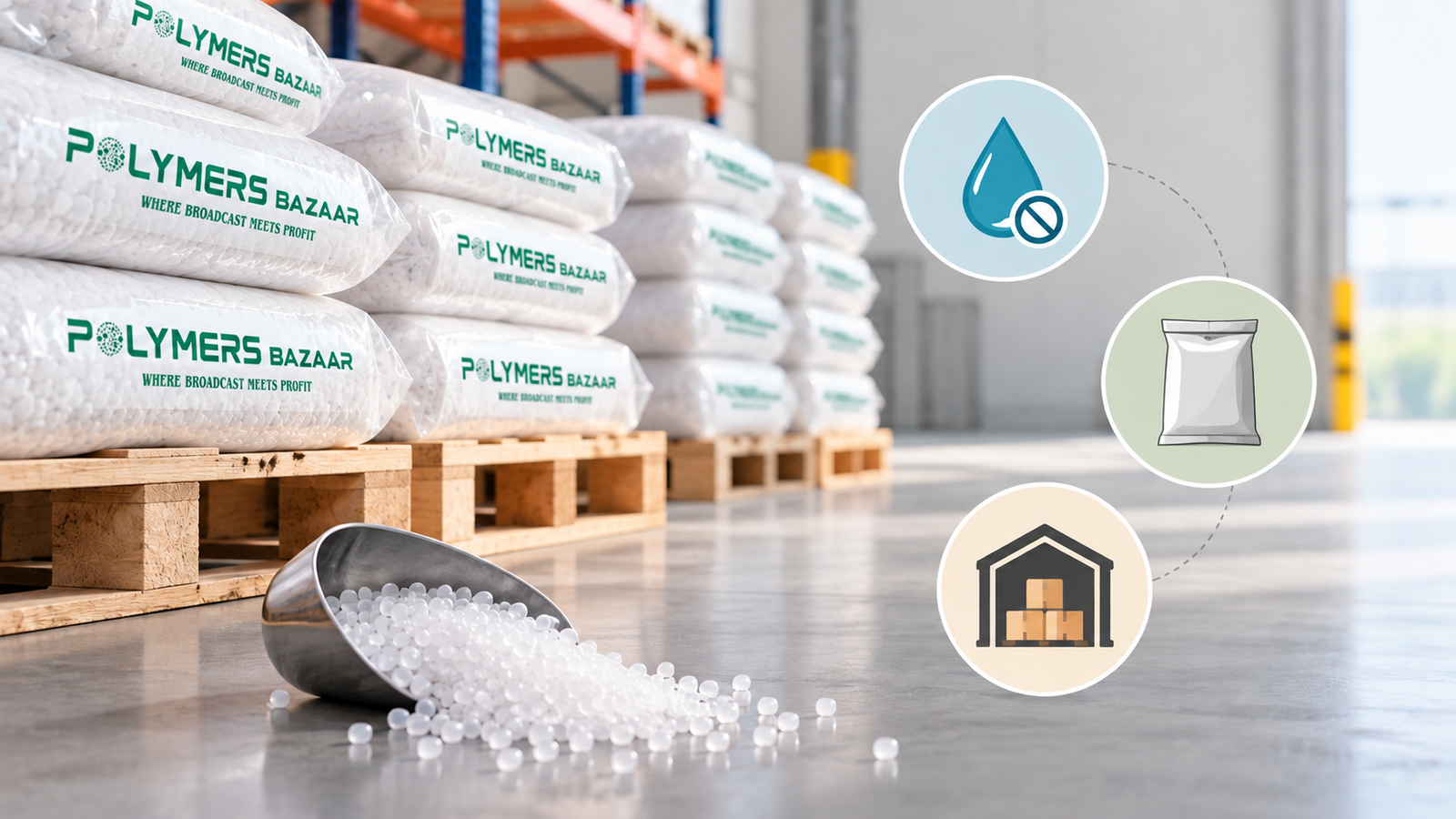
Proper polymer granule storage means
keeping thermoplastic pellets in their original sealed packaging, in a cool,
dry, clean, shaded area, until they are processed. Granules are the small
pellets used in extrusion and injection molding. They usually come in 25 kg
bags, big bags, or octabins, and large plants use silos.
Why Storage Matters for Quality and Processing
Moisture absorption begins as soon as
resin meets humid air. When wet hygroscopic resin is melted, the water can
cause splay and voids. It can also break polymer chains and lower mechanical
strength.
Heat and sunlight matter too. One
polypropylene safety data sheet gives a minimum shelf life of one year from
manufacture, but only with good packaging, handling, and storage. In my view,
the frustrating part is that storage errors show up weeks later at the machine,
so people often blame the grade.
Key Factors to Consider
Storage advice can feel generic, so I
focus on five factors that change results in real warehouses. Each one is
practical and easy to audit. Together they cover most of the problems I see
described by processors and suppliers.
1. Moisture and
Humidity
Start by knowing what you hold. Nylon
(PA), ABS, PBT, and PMMA are hygroscopic and need pre-drying before processing.
PE and PP are generally not, though surface moisture and condensation still
matter. That is one more reason to start with choosing the right polymer grade, because the
polymer family sets how much moisture protection you need.
Toray advises that undamaged, sealed bags
let nylon pellets absorb almost no moisture. Pellets left exposed should be
dried to no more than 0.15 to 0.2% water. Resealing an opened bag helps only
partly, so use the whole bag soon. Also note that polyethylene film is porous
to moisture vapor, so a standard bag is not a true barrier.
2. Temperature
and Sunlight
Keep granules away from direct sunlight
and heat sources. The polypropylene safety data sheet above calls for a cool,
well-ventilated place at no more than 40°C and 80% relative humidity, away from
flames. For your own grade, confirm the numbers in the supplier's paperwork. If
you are unsure how, it helps to learn how to read a polymer technical data sheet.
3. Packaging and
Containers
The original bag is your best protection,
so keep it intact and sealed until use. For partly used material, use a clean,
closed, labeled container. Sealed bins also help prevent spills, a point made
by Pipelife under Operation Clean Sweep.
4. Stacking,
Layout, and Stock Rotation
Follow the stacking limit on the safety
data sheet: never three pallets high, and two only on sound flooring. Keep
pallets dry, leave space between stacks for airflow, and fix wet floors or
sweating walls quickly. Label lots with dates and use first-in, first-out so
old stock does not sit at the back.
5. Contamination
and Spill Control
Dust and chemical fumes are exposures to
avoid, so keep bags closed and away from grinding or dusty work. Polymer dust
can carry an explosion risk, and material can build static charge, so ground
equipment. Under Operation Clean Sweep guidance, sweep spills promptly and
never wash pellets into drains.
Best Practices for Bulk Buyers, from Receiving Stock to
Pre-Drying
Storage starts at the loading bay. If you buy
bulk polymer raw materials online, even with logistics handled for
you, as the Polymers Bazaar buy page describes, the first check still happens
when the truck is unloaded.
- Inspect bags on receipt for tears, wet patches, and damaged seals.
- Separate any
suspect pallet and check the material before use.
- Record the
lot number and date, then store off the floor.
- Let cold
pellets sit in the warm room before molding, as Toray advises.
- Dry
hygroscopic grades per supplier guidance, and confirm with a moisture
analyzer if needed.
- Process dried resin quickly. Plastics Technology suggests within
about 30 minutes.
Practical Examples
These examples are illustrative, not
real cases.
●
Nylon in a humid month: A processor opens a bag, uses half, and folds the top over. Two days
later the second half needs re-drying before molding. Using the full bag, or
drying it, avoids the defects.
●
PP stock in a warehouse: A buyer stacks four pallets near a loading door with sunlight coming
in. Limiting stacks to two pallets and moving them into shade follows the
datasheet advice.
Common Mistakes
●
Trusting ordinary polyethylene
bags as a moisture barrier.
●
Resealing an opened bag and
assuming it is fully protected.
●
Leaving pellets in the hopper for
too long in humid air.
●
Skipping moisture checks or
over-drying sensitive resins.
●
Stacking pallets too high or
leaving them on wet floors.
●
Sweeping spilled pellets toward
drains.
Key Takeaways
●
Know whether each grade is
hygroscopic before choosing storage.
●
Original, undamaged packaging is
the best protection.
●
Use datasheet limits, not guesses,
for temperature, humidity, and stacking.
●
Inspect deliveries, date every
lot, and rotate stock.
●
Treat spills as both a quality and
environmental issue.
Conclusion
Good storage is often small things done
repeatedly, like sealed bags, dry
floors, shade, proper stacks, and a good check before processing. With them,
you spend less time on problems that never were resin problems.
I hope you can take something from this guide,
and start looking into it. One warehouse inspection this week should be enough
for you to spot several easy fixes.
FAQs
How long can polymer granules be
stored?
One PP safety data sheet gives a minimum shelf life of
one year from manufacture under proper conditions. Real shelf life depends on
packaging, handling, and storage.
Do all polymer granules need drying?
No. Hygroscopic grades such as nylon, ABS, and PBT need
drying, while PE and PP generally do not. Any granules exposed to moisture may
need a check.
Can I store polymer granules outdoors?
It is best to avoid it. Sunlight, heat, and humidity
all work against the material and its packaging.
Should I reseal an opened bag?
Resealing helps
a little, but Toray notes it cannot fully protect pellets. Use the bag up as
soon as you can.
How do I check moisture in granules?
Moisture analyzers or Karl Fischer titration are the
methods named by RJG and PlastikCity. Use them before processing sensitive
grades.