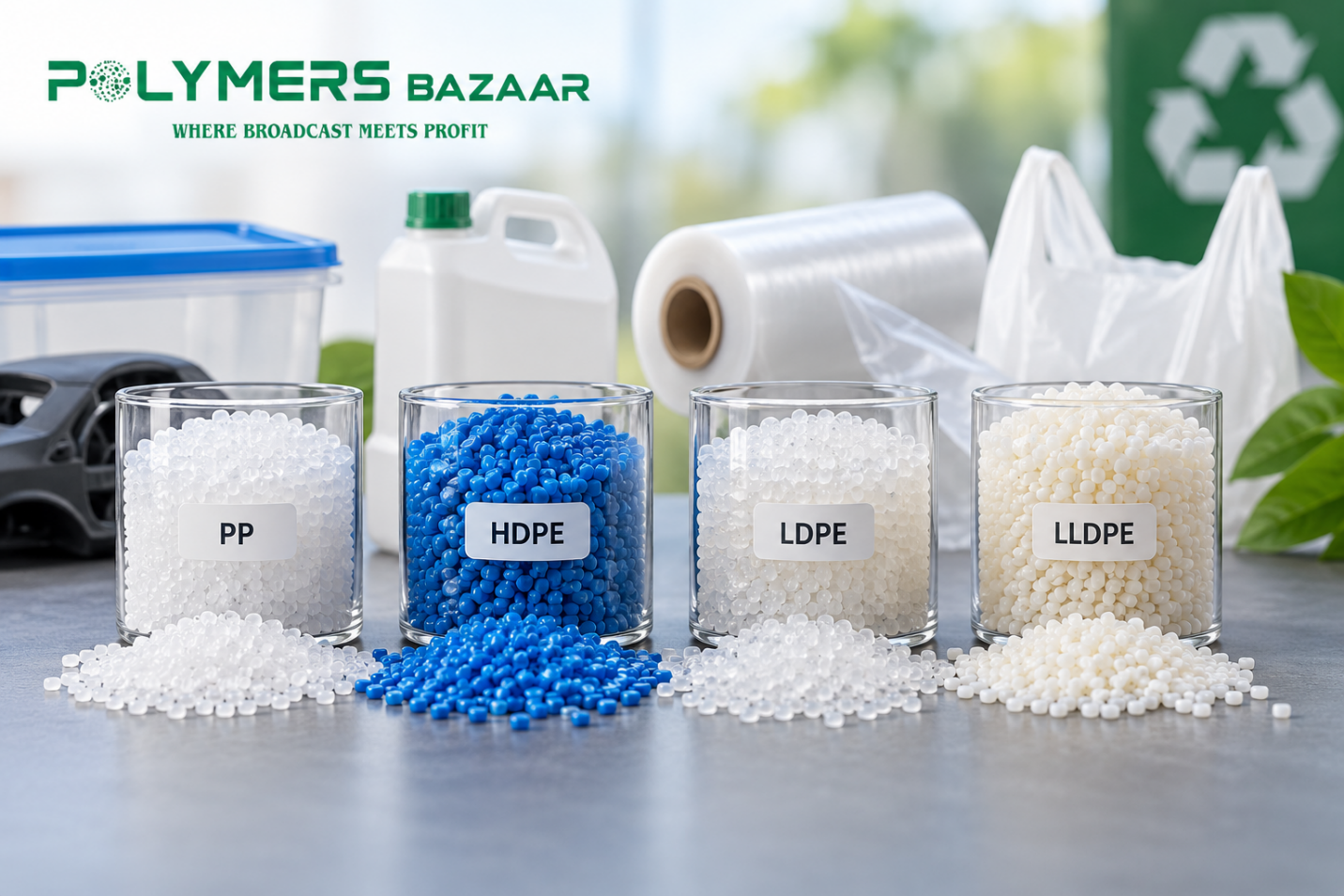
PP (polypropylene) is a thermoplastic known for chemical resistance, stiffness, and relatively good heat performance.
HDPE (high-density polyethylene) is a relatively rigid polyethylene commonly used for durable molded
products and containers.
LDPE (low-density polyethylene) is softer and more flexible, making it popular for films, bags, and
applications where clarity and flexibility matter.
LLDPE (linear low-density
polyethylene) combines flexibility with strong
tensile, impact, and puncture resistance, making it particularly useful for
demanding film applications.
PP vs HDPE vs LDPE vs LLDPE
|
Polymer |
Main
strengths |
Typical
applications |
|
PP |
Heat and chemical resistance, stiffness |
Automotive parts, packaging, molded
components |
|
HDPE |
Rigidity, durability, impact resistance |
Bottles, tanks, crates, pallets |
|
LDPE |
Flexibility, softness, clarity |
Bags, packaging films, agricultural films |
|
LLDPE |
Toughness, stretch, puncture resistance |
Flexible packaging and industrial films |
The important point is that these are
broad material families. Individual grades can have substantially different
properties, so the resin datasheet matters before making a final selection.
How to Choose the Right Polymer
Before selecting a grade, I would look at
five practical factors.
1. Operating Temperature
Temperature can quickly eliminate
otherwise suitable materials. PP generally offers better heat performance than
the polyethylene grades, although the exact limits depend on the grade and
application.
2. Strength and Flexibility
For rigid products, HDPE or PP may be
more appropriate. If the product needs to bend, stretch, or absorb mechanical
stress, LDPE and LLDPE deserve closer consideration.
3. Impact and Puncture Resistance
LLDPE is particularly useful where
flexible films need toughness and puncture resistance. HDPE is also a good
candidate for durable rigid applications.
4. Manufacturing Process
Consider whether the product will be
injection molded, blow molded, or produced through film extrusion. A polymer
that performs well in the finished product still needs to process reliably with
your manufacturing method.
5. Specific Grade Properties
Don't stop at the polymer name. Compare
melt flow, tensile strength, elongation, impact performance, density, clarity,
temperature performance, additives, and other properties in the actual supplier
datasheets.
Practical Recommendations
●
Choose PP when higher heat performance, chemical resistance, and stiffness are
priorities.
●
Choose HDPE for rigid, durable products where strength and impact resistance
matter.
●
Choose LDPE for soft, flexible products where clarity and easy processing are
valuable.
●
Choose LLDPE for flexible films requiring toughness, stretch, tensile strength, and
puncture resistance.
Common Material Selection Mistakes
One common mistake is choosing entirely
on price. A cheaper resin is not necessarily cheaper once poor durability,
processing problems, or product failures are considered.
Another mistake is comparing only one
property, such as tensile strength. Real applications often require a balance
of stiffness, impact resistance, flexibility, temperature performance, chemical
resistance, and processing behavior.
Finally, avoid assuming that every grade
within a polymer family performs the same way. Always evaluate the specific
resin intended for production.
Key Takeaways
●
PP is generally the better option
for demanding temperature conditions.
●
HDPE is well suited to rigid and
durable applications.
●
LDPE provides flexibility and
softness.
●
LLDPE offers strong performance in
tough flexible films.
●
The best choice depends on the application,
processing method, and specific resin grade.
Conclusion
Choosing between PP, HDPE, LDPE, and
LLDPE becomes much easier when you define the application's actual requirements
first. Temperature, mechanical performance, flexibility, processing, and
chemical exposure should guide the shortlist.
I would always validate the final
material choice against the manufacturer's datasheet and, where possible, test
samples under realistic operating conditions. That extra step can prevent an
expensive material decision from becoming an expensive production problem.